Understanding Drug-Induced Gingival Overgrowth and Its Connection to Periodontal Disease
If you have noticed that your gums look swollen, puffy, or seem to be growing over your teeth, and you also take certain prescription medications, the two may very well be related. A condition called drug-induced gingival overgrowth (sometimes referred to as gingival hyperplasia) causes the gum tissue to enlarge, sometimes dramatically, as a side effect of medications you may need for serious medical conditions. It is more common than most patients realize, it can significantly affect your oral health, and it has a direct and important relationship with periodontal disease.
As your periodontist, Dr. Yant wants you to understand exactly what is happening, which medications are involved, how the overgrowth interacts with gum disease, and what we can do about it together. This is a condition we manage regularly, and with the right approach, the outcomes are very good.
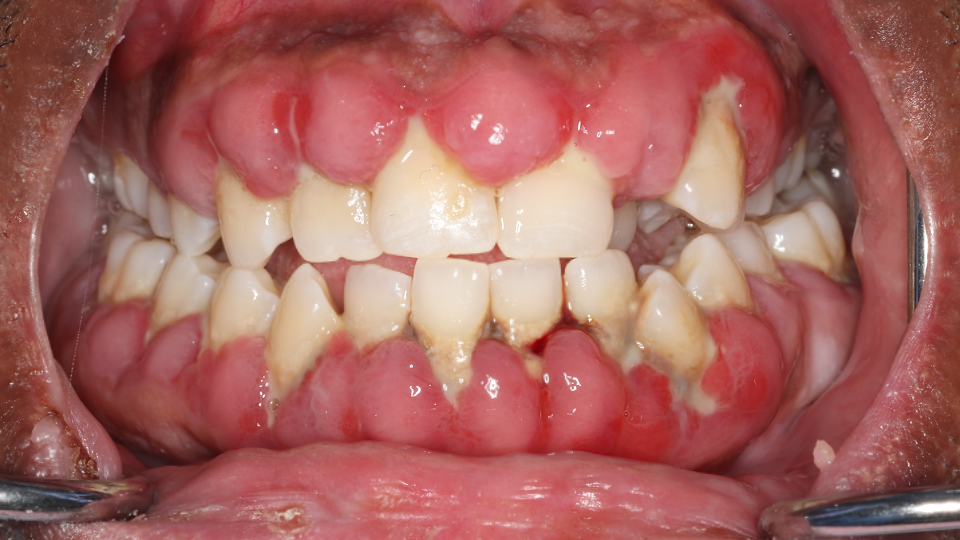
Severe case of Dilantin (phenytoin) induced gingival hyperplasia.
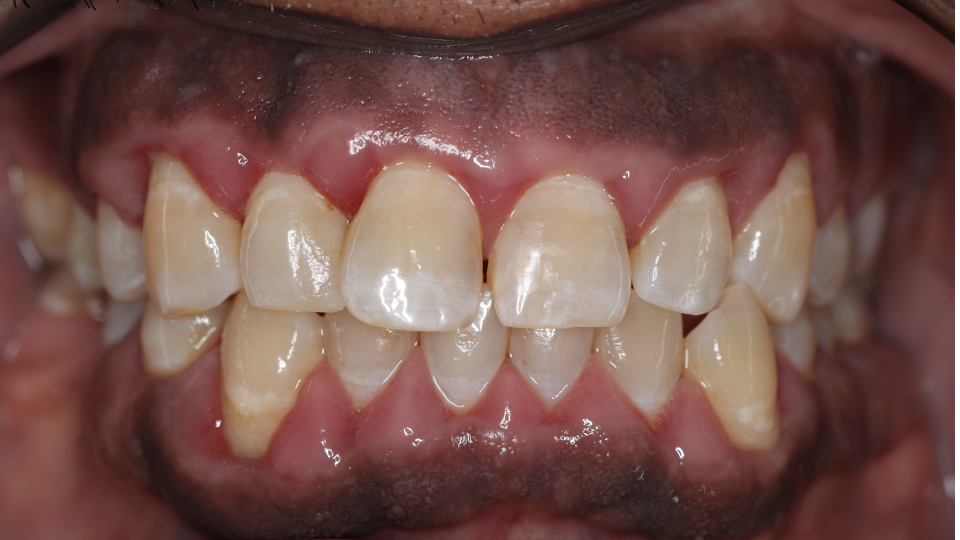
Moderate case of Amlodipine induced gingival hyperplasia.
What Is Drug-Induced Gingival Overgrowth?
In a healthy mouth, your gums fit snugly around each tooth in a thin, firm collar of pink tissue. Drug-induced gingival overgrowth occurs when certain medications trigger an excessive accumulation of collagen and other connective tissue components within the gums. The tissue becomes thickened, enlarged, and sometimes lobulated (developing rounded, bulging segments between the teeth). The overgrowth typically begins in the interdental papillae, the small triangular points of gum tissue that fill the spaces between your teeth, and can gradually extend to cover significant portions of the tooth surfaces if left untreated.
The condition is not an infection and it is not cancer. It is an abnormal tissue response driven by the way certain drugs interact with the fibroblasts (the cells that produce collagen) in your gum tissue. However, as explained below, it creates an environment where periodontal disease can develop rapidly and become difficult to control.
Which Medications Cause Gingival Overgrowth?
Three major classes of medications are responsible for the vast majority of drug-induced gingival overgrowth. If you take any of these, Dr. Yant wants you to be aware of the connection.
Anticonvulsant Medications
Phenytoin (Dilantin) is the most well-known offender in this category and has been associated with gingival overgrowth since the 1930s. Approximately 50 percent of patients taking phenytoin will develop some degree of gum enlargement. It remains widely prescribed for epilepsy and seizure disorders. Other anticonvulsants, including valproic acid and phenobarbital, have been associated with overgrowth as well, though at significantly lower rates.
Calcium Channel Blockers
Nifedipine (Procardia, Adalat) is the calcium channel blocker most frequently linked to gingival overgrowth, with reported prevalence rates ranging from roughly 15 to 40 percent of patients. However, other medications in this class, including amlodipine (Norvasc), verapamil (Calan), and diltiazem (Cardizem), can also cause enlargement. These drugs are prescribed for high blood pressure, angina, and certain heart rhythm disorders. Because cardiovascular disease is so common, calcium channel blockers are now the most frequent overall cause of drug-induced gingival overgrowth in clinical practice.
Immunosuppressant Medications
Cyclosporine (Sandimmune, Neoral) is used to prevent organ rejection in transplant patients and to manage severe autoimmune conditions. Approximately 25 to 30 percent of patients on cyclosporine develop clinically significant gingival overgrowth. This is a particularly challenging situation because the medication is often medically essential and cannot be easily substituted.
If you take any medication in these three classes and have noticed changes in your gum tissue, please bring it to Dr. Yant's attention. Even if the overgrowth seems mild, early intervention makes management far more effective.
Why Do These Drugs Affect the Gums?
Researchers have studied this question extensively, and while the exact mechanisms vary somewhat between drug classes, the core problem is the same: these medications alter the behavior of gingival fibroblasts, the cells responsible for producing and maintaining the collagen framework of your gums.
Under the influence of these drugs, fibroblasts produce more collagen and other extracellular matrix proteins than they break down. Normally, there is a carefully regulated balance between collagen production and collagen degradation in your gum tissue. These medications tip that balance heavily toward production, and the result is a net accumulation of tissue that manifests as clinical overgrowth.
Several factors influence whether a given patient will develop overgrowth and how severe it becomes. Genetic susceptibility plays a role; not everyone on the same drug at the same dose will develop the condition. The dose and duration of the medication matter as well, with higher doses and longer treatment courses generally increasing risk. But the single most important local factor is the presence of dental plaque and gingival inflammation.
This is the critical point: drug-induced gingival overgrowth and periodontal disease are not separate problems. They fuel each other. The overgrowth creates conditions that promote gum disease, and the inflammation from gum disease accelerates and worsens the overgrowth.
The Vicious Cycle: Overgrowth and Periodontal Disease
Understanding this cycle is essential to understanding why treatment requires a coordinated approach.
Overgrowth creates plaque traps. As your gum tissue enlarges, it forms deep pockets, crevices, and folds that are nearly impossible to clean with a toothbrush and floss alone. Bacterial plaque accumulates in these sheltered areas, and because the tissue is swollen and distorted, even the most diligent patient cannot reach it. These plaque deposits harden into calculus (tarite) and harbor the pathogenic bacteria that drive periodontal disease.
Plaque triggers inflammation. The bacterial plaque trapped beneath the overgrown tissue triggers a chronic inflammatory response. Your immune system sends inflammatory cells and chemical mediators to the area to fight the bacteria, and this sustained inflammation causes the classic signs of periodontal disease: redness, bleeding, deeper pocketing, and ultimately destruction of the bone and connective tissue that support your teeth.
Inflammation worsens the overgrowth. Here is where the cycle completes itself. The inflammatory mediators produced by the body's response to plaque bacteria actually stimulate additional fibroblast activity and collagen production in the gum tissue. In other words, the very inflammation caused by the trapped plaque makes the overgrowth worse, which creates even deeper pockets, which trap even more plaque. Without intervention, this cycle accelerates.
This is why patients with drug-induced gingival overgrowth are at substantially elevated risk for developing significant periodontal disease. It is also why controlling the overgrowth and controlling periodontal disease must happen simultaneously.
What You May Experience
Patients with drug-induced gingival overgrowth often describe a range of symptoms that affect their daily life beyond just the appearance of their gums.
Visible tissue enlargement is usually the first sign. You may notice that the gum tissue between your teeth looks puffy, rounded, or seems to be creeping up over the tooth surfaces. In severe cases, the overgrowth can partially or even completely cover the crowns of the teeth.
Bleeding and tenderness are common because the enlarged tissue is inflamed, fragile, and constantly irritated by trapped plaque. Many patients report that their gums bleed easily during brushing, flossing, or even eating.
Difficulty with oral hygiene becomes a source of frustration. The overgrown tissue makes it physically difficult to brush and floss effectively, and patients often feel like their efforts are not making a difference. This frustration is completely understandable, and Dr. Yant wants you to know that it is not a reflection of your effort or dedication.
Chewing difficulty and aesthetic concerns emerge as the overgrowth progresses. Enlarged tissue can interfere with bite function, trap food during meals, and alter the appearance of your smile in ways that affect your confidence and social comfort.
Pain and bad breath may develop as the inflammatory component of the condition worsens. The deep pockets harbor bacteria that produce sulfur compounds, leading to persistent malodor that does not respond to mouthwash or routine brushing.
How We Treat Drug-Induced Gingival Overgrowth
Treatment requires a multi-layered approach, and as your periodontist, Dr. Yant coordinates closely with your physician or prescribing specialist throughout the process. Here is how we approach it.
Step One: Intensive Plaque Control and Professional Cleaning
The foundation of every treatment plan begins with bringing the bacterial burden under control. This includes thorough scaling and root planing (a deep cleaning beneath the gumline), combined with a customized home care regimen. In many cases, meticulous plaque control alone can produce a meaningful reduction in tissue enlargement, particularly when the inflammatory component is significant. Dr. Yant will work with you to identify the most effective home care tools for your specific situation, which may include specialized interdental brushes, oral irrigators, and antimicrobial rinses.
Step Two: Medication Review With Your Physician
Whenever clinically feasible, Dr. Yant will communicate with your prescribing physician to discuss whether your medication can be changed to an alternative that carries a lower risk of gingival overgrowth. For example, some patients on phenytoin can be transitioned to a different anticonvulsant. Some patients on nifedipine may tolerate a switch to a different class of blood pressure medication. These decisions are always made collaboratively with your medical team, and your systemic health always comes first. In cases where the medication cannot be changed, we proceed with treatment knowing that management rather than cure is the goal, and we build a long-term maintenance plan accordingly.
Step Three: Surgical Correction
When the overgrowth is moderate to severe and does not resolve adequately with plaque control and medication adjustment alone, surgery is indicated. The specific procedure I recommend depends on whether the overgrowth has been present long enough for bone loss to occur. This is a critical distinction, and it is one of the reasons early intervention matters so much.
Gingivectomy: When the Condition Is Caught Early
If drug-induced gingival hyperplasia is identified and treated before bone loss has occurred, a gingivectomy is typically sufficient. In this procedure, I remove the excess gum tissue and carefully reshape what remains to restore a normal, healthy contour around each tooth. Because the underlying bone architecture is still intact, the tissue can be sculpted back to its proper form without the need to address deeper structural damage. The procedure eliminates the deep pockets and folds where bacteria were hiding, restores your ability to clean effectively at home, and dramatically improves both function and appearance. A gingivectomy is performed under local anesthesia, and most patients recover comfortably within one to two weeks. The results are typically excellent.
Osseous Surgery: When the Condition Has Been Long-Standing
If drug-induced gingival hyperplasia has been present for an extended period of time, there is a good chance that the chronic cycle of plaque accumulation and inflammation has already caused damage to the underlying bone. In these cases, a gingivectomy alone is not sufficient because simply removing the excess soft tissue does not address the irregular bone contours and bony defects that have developed beneath it. Without correcting the bone architecture, the tissue will heal into an unhealthy configuration, deep pockets will persist, and the disease process will continue.
Osseous surgery (also called osseous resective surgery or flap surgery) is the procedure I perform in these situations. During osseous surgery, I reflect the gum tissue to gain direct access to the bone, remove the diseased tissue, thoroughly clean the root surfaces, and then reshape the bone to eliminate the craters and ledges where bacteria harbor. The gum tissue is then repositioned and sutured against the newly contoured bone, creating a healthier architecture that is easier for you to maintain at home. Recovery from osseous surgery takes somewhat longer than a gingivectomy, typically two to four weeks for initial healing, but the procedure addresses the full extent of the disease and establishes a foundation for long-term health.
This is why I urge patients not to wait. When drug-induced gingival overgrowth is caught early, before bone loss has occurred, a gingivectomy is a straightforward and highly predictable procedure. The longer the overgrowth persists unchecked, the greater the likelihood that bone damage has occurred and the more involved the surgical treatment becomes. Early referral to a periodontist can make the difference between a simple tissue recontouring and a more complex osseous procedure.
It is important to understand that if the causative medication continues, there is a possibility of recurrence. This is not a failure of treatment. It means that ongoing periodontal maintenance and excellent home care become even more important as a long-term strategy to keep the overgrowth controlled.
Step Four: Ongoing Periodontal Maintenance
Patients with a history of drug-induced gingival overgrowth benefit from more frequent professional maintenance visits, typically every three months rather than the standard six. These visits allow Dr. Yant to monitor for early signs of recurrence, perform targeted cleaning in areas of concern, reinforce home care techniques, and intervene before the overgrowth becomes clinically significant again. This proactive maintenance schedule is one of the most effective tools we have for long-term management.
What You Can Do Right Now
Do not stop or change your medication on your own. The medications that cause gingival overgrowth are prescribed for serious medical conditions. Stopping them abruptly can have dangerous consequences. Any medication changes must be coordinated through your physician.
Commit to exceptional oral hygiene. This is the single most powerful thing you can do to minimize the severity of the overgrowth and protect yourself from the periodontal disease it promotes. Thorough brushing twice daily with a soft-bristled or electric toothbrush, daily interdental cleaning, and antimicrobial rinses can make a measurable clinical difference.
Keep your periodontal maintenance appointments. Professional cleanings at regular intervals remove the calculus and plaque that home care cannot reach, especially in areas where the tissue is enlarged. Skipping or delaying these appointments allows the vicious cycle of plaque, inflammation, and overgrowth to reestablish itself.
Tell Dr. Yant about every medication you take. Medication lists change over time, and new prescriptions can introduce new risks. A complete and current medication list at every visit allows us to anticipate potential complications and adjust your care plan proactively.
A Final Word
Drug-induced gingival overgrowth can be alarming when you first notice it, and frustrating to live with as it progresses. But Dr. Yant wants you to leave this conversation with a clear understanding: this is a well-understood condition with effective treatment options. We know why it happens, we know which medications cause it, we know how it interacts with periodontal disease, and we have proven strategies to manage it.
Your periodontal health and your systemic health are deeply connected. The medications you take to protect your heart, control your seizures, or preserve your transplanted organ are vitally important. Dr. Yant's role is to make sure your gums and jawbone stay healthy alongside those treatments, so that you never have to choose between your overall health and your oral health.
If you are experiencing gum tissue changes and you take any of the medications discussed here, please do not wait. The earlier we address this, the simpler and more effective the treatment. Dr. Yant is here to help, and together we can keep your smile healthy for the long term.
Questions About Your Periodontal Health?
If you have concerns about your gum health or would like to learn more about any of the topics discussed in this article, we are here to help.